
Adil Raza Khan | March 29, 2025

Sectional title property is a concept that may not be very well-known to investors and buyers. This is a form of property ownership that strikes a balance between individual and shared ownership.
In essence, a sectional title property allows you to own a specific unit (e.g., apartment or townhouse) within a larger complex or development. Meanwhile, you also share ownership of common areas (e.g., parking lots, lobbies, elevators, gardens). Let’s ponder on how sectional title works, how it differentiates between freehold property, and its pros and cons.
Curated Opportunities
Flexible buying options for smarter property decisions.
Handpicked properties sorted for the strongest value.
Investment-focused listings with return potential.
Browse Dubai communities with properties for sale.
In its core, sectional title property is a model of ownership popular in modern developments. These sectional title properties include apartment buildings, townhouses, and more. This means that you will get exclusive ownership to a specific unit but are also responsible, along with other owners, for the communal areas. It brings about convenience and a sense of community between property owners.
Additionally, a sectional title property model is usually composed of three main elements.
To fully grasp what sectional title property is, it is important to compare it with freehold property ownership. Let’s discuss the sectional title and freehold in detail for better understanding.
With freehold property, you own both the property and the land it’s built on. You also have full control and responsibility over the property. This includes all decisions, maintenance, insurance, utility bills, and modifications. Moreover, freehold properties mostly refer to villas, standalone homes, cluster homes, and more.
In sectional title property, you own a specific “section” or “unit” within a larger development or building. This could be an apartment, townhouse, or residence that’s part of a shared complex.While you hold exclusive ownership to your unit, you share ownership of the common areas with other unit owners. These common areas include amenities like gym facilities, swimming pools, gardens, and more.
Moreover, the maintenance and management of the common areas are usually handled by the committee of unit owners. The upkeep will then be paid through the contributions from all the unit owners.
One of the advantages of sectional title property is its affordability and convenience. Usually, these properties are more affordable than owning both units and land. Plus, there’s also the convenience from shared responsibilities for the upkeep of common areas. Another benefit is the access to amenities that might be too expensive to maintain on your own. In many complexes and developments, you’ll have shared access to amenities like gyms, tennis courts, 24-hour security services, and more. You’ll only have to pay for the portion of the overall cost of maintaining the condition of these amenities.
Moreover, sectional title properties often have tight security and are located in prime areas. This offers you peace of mind and great connectivity.
Despite the many perks, sectional title property does come with some limitations. The biggest drawback is that you have less control over your property. You might find it hard to make changes in your property, host events, or even adopt a pet. Additionally, since the management of communal areas is managed by a body corporate, there are cases when owners feel it’s not managed properly. Plus, maintenance fees that you pay monthly may increase over time, which can impact your budget.
Furthermore, for changes in rules and regulations, you might have limited influence as an individual. Lastly, living close to others may not be all too pleasing for you as well, which can cause you stress.
Best Project Finder
Filter opportunities by budget, property type, bedroom mix, and strategy to uncover projects aligned with your investment goals.

Overall, sectional title property in Dubai is a unique form of ownership that blends exclusive and shared responsibilities. It’s an excellent choice if you want the convenience of community living with premium amenities without high individual maintenance costs. However, it does have limitations when it comes to making changes and freedom. If you’re considering purchasing a sectional title property, it’s important to weigh the advantages and disadvantages to see if it fits your lifestyle and long-term plans.
Additionally, if you’re looking for properties or want expert advice on real estate investment in Dubai, APIL Properties is here to guide you. Our expertise and extensive experience can help you navigate the complexities of sectional title ownership.
Sectional title property allows you to own a specific unit within a larger complex or development.
The main criteria that differentiate sectional title from freehold are ownership type, maintenance responsibility, and extent of control.
Sectional title properties are typically more affordable, with a variety of amenities within the larger development or complex. Most of these complexes offer heightened security and shared maintenance costs for communal areas.

WRITTEN BY
Adil Raza Khan is a Dubai luxury real estate expert with over 13 years of experience in the UAE property market. He is the Chairman of APIL Properties.
Investment Finder
Use smart filters to discover Dubai projects matched to your investment goals.
Try the Investment Finder
The €400K Greece Golden Visa is a mid-tier residency-by-investment pathway requiring a minimum €400,000 investment in residential real estate located in eligible non-prime regions. It offers a 5-year renewable Greek residence permit to investors and their families with no minimum stay period and access to the Schengen area.
The investment should be in a single property of at least 120 sqm, and with specific rules, such as prohibiting short-term rentals. Leasing may be done for the long term however, allowing the generation of income.
Positionally, the €400K tier offers a balanced entry point for Real Estate in Greece—combining capital efficiency, regulatory clarity, and stable rental yield potential within Greece’s supply-constrained housing market, making it suitable for investors seeking EU residency with functional residential assets.

The €250K Greece Golden Visa is a residency-by-investment scheme that provides non-EU investors with a 5-year, renewable residence visa in Greece for an investment of at least €250,000. This threshold is now generally used for certain types of real estate in greece (commercial-to-residential conversion or listed-building restoration).
Investors are allowed to include family members, there is no minimum residency period, and visa-free entry to the Schengen Zone. It is an asset investment as well as a place to live, and can be used to earn rental income or to make long-term capital gains. It remains one of Europe’s lowest-cost entry points into EU residency with structured investment exposure.
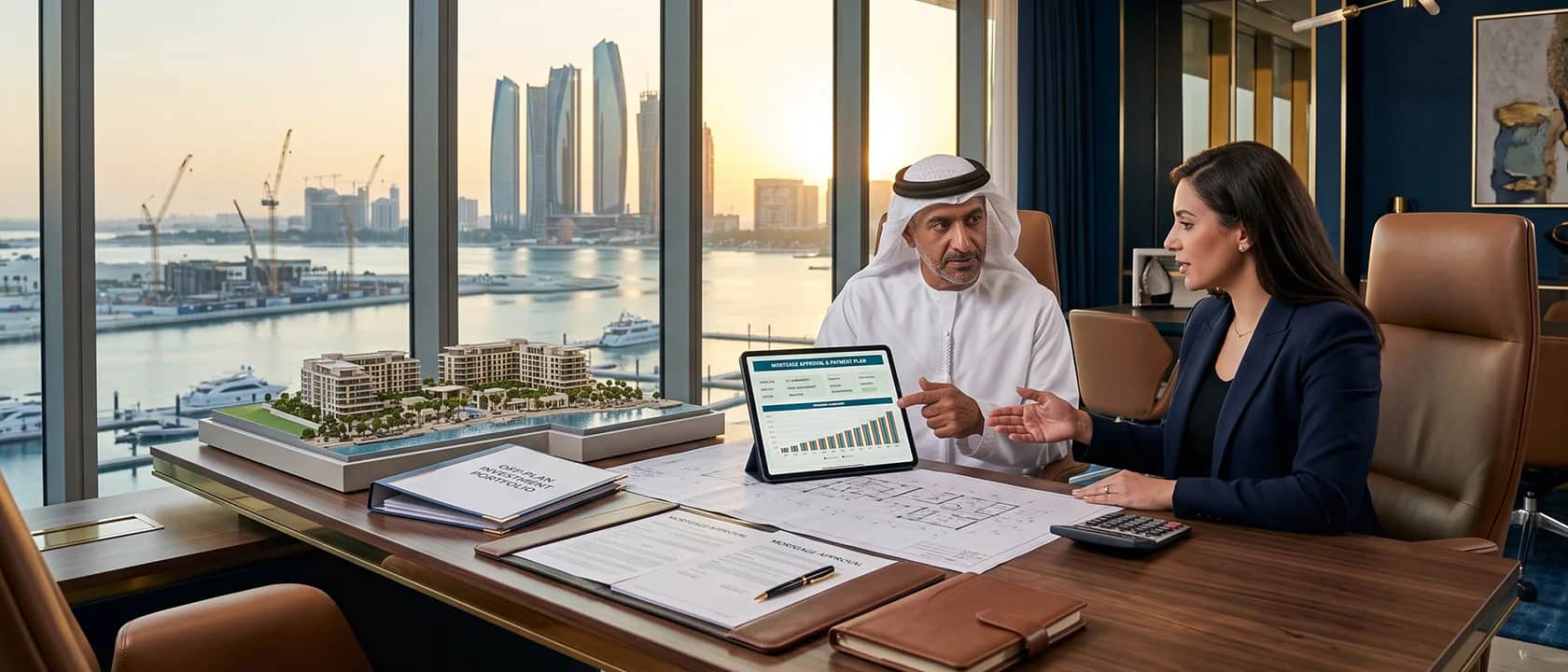
Modon & ADIB have introduced Abu Dhabi’s First Off-Plan Financing through a partnership, allowing eligible buyers to secure up to 75% financing during the construction phase of a Modon off-plan property.
This marks a structural shift in a market historically dominated by cash transactions, where financing was typically only available after project completion. The new model enables buyers to enter off-plan developments with significantly lower upfront capital, combining a 15% payment during construction and 5–10% at handover, while ADIB (Abu Dhabi Islamic Bank) funds the remaining portion throughout the development lifecycle. The solution is exclusively available for future Modon projects, giving the developer a distinct competitive advantage in upcoming launches.
From a market perspective, this framework expands accessibility, improves capital efficiency for investors, and introduces institutional risk-sharing into early-stage real estate transactions. For Abu Dhabi’s off-plan segment—which already accounts for the majority of residential sales value—this financing structure is expected to increase buyer participation, accelerate absorption rates, and strengthen overall market liquidity.